

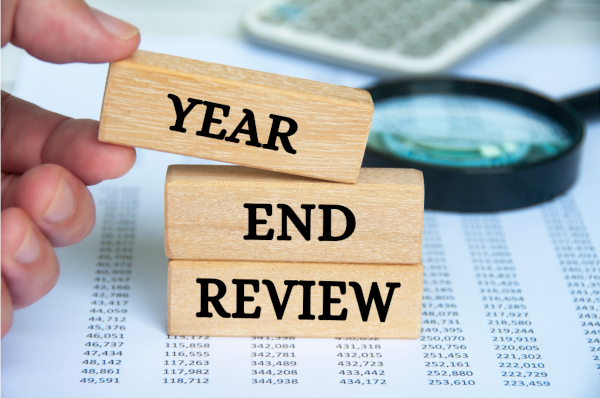
Keep More of What You Earned: Year-End Tax Tips for 2026
It is hard to believe we are already approaching the end of another year. Between holiday plans and time with family, the next few weeks will go quickly. Before they do, a little planning now can help prevent tax surprises later.
Here are a few things we are discussing with clients as we wrap up 2026.
Take Another Look at Your Deductions
The standard deduction for 2026 is $32,200 for married couples filing jointly and $16,100 for single filers. Meanwhile, the state and local tax deduction cap is $40,400 for most filers, with reductions at higher income levels. That means some households that previously took the standard deduction may benefit from itemizing this year.
Make the Most of Your Giving
If you take the standard deduction, a new deduction allows eligible cash gifts to qualifying charities of up to $1,000, or $2,000 for married couples filing jointly. For those who itemize, charitable contributions now must exceed 0.5% of adjusted gross income before becoming deductible, subject to other limits. You can search the IRS’s Tax Exempt Organization Search to determine if an organization qualifies.
If you are age 70½ or older, giving directly from your IRA through a qualified charitable distribution may be worth considering. The 2026 limit is $111,000 per person, and qualifying gifts can count toward your Required Minimum Distribution (RMD) without adding to federal taxable income. Talk with your HCM Advisor before taking your remaining IRA withdrawals so we can coordinate your giving.
If you are giving money to any individual recipient, the 2026 annual gift tax exclusion is $19,000 per recipient. Below that threshold, you do not need to report the gift nor pay gift tax on it.
Review Retirement Savings and Withdrawals
For 2026, the employee contribution limit is $24,500 for 401(k) and 403(b) plans, and $7,500 for IRAs, with additional catch-up contributions available for eligible savers. Review your contributions while there is still time to adjust payroll deductions.
Similarly, if you have an HSA account, this year's contribution limit is $4,400 for single coverage and $8,750 for family, with an additional $1,000 per eligible individual age 55 or older. Maxing out your HSA contributions is a smart tax saving strategy.
If you have an RMD, confirm what remains to be withdrawn. Most annual RMDs are due by December 31st, although special rules apply to the first year of your RMD.
Look at the Whole Tax Picture
Year-end is also a good time to evaluate Roth conversions, investment gains and losses, and whether your tax withholding is on track.
These decisions work together. Before making a move, we want to understand how it fits with your income needs, tax situation, and long-term goals.
Let HCM Help You Put It Together
You do not need to sort through all of this on your own. At HCM Wealth Advisors & CPAs, we believe your investment and tax planning should work together.
Reach out to your HCM advisor and CPA before year-end. We can review where things stand, talk through your options, and help you decide what makes sense for you and your family.
A conversation now can make the start of the new year a little easier.
For educational purposes. Tax rules and benefits depend on your individual circumstances.